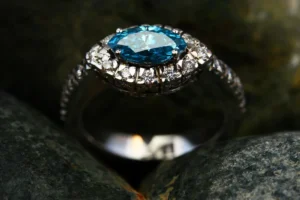
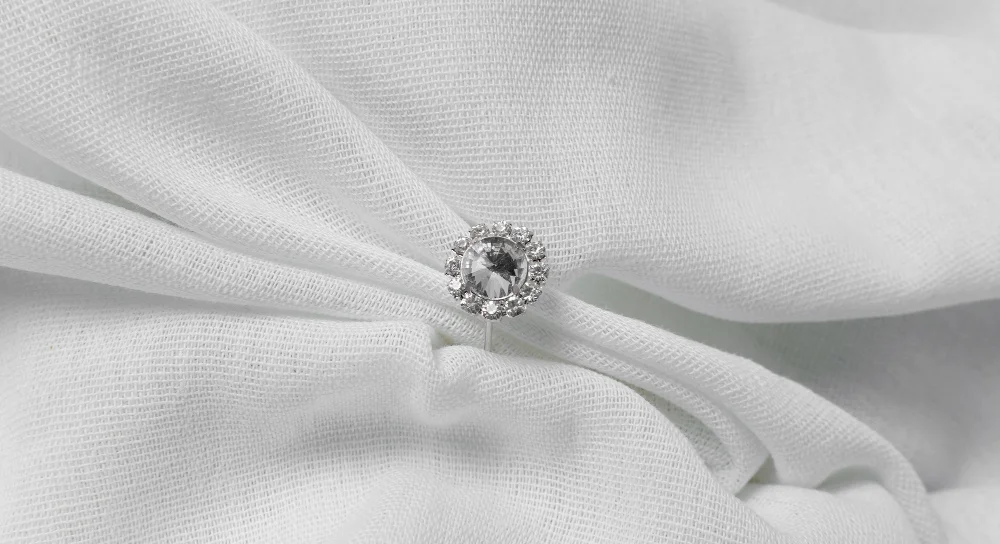
Have you ever admired a sparkling diamond ring only to realise the band wasn’t gold or platinum—but sterling silver? And then wondered… “Are diamonds even real if they’re set in sterling silver?”
That question first came to me more than a decade ago, during my apprenticeship with a third-generation British jeweller in Hatton Garden.
A customer walked in holding a vintage silver ring with a dazzling stone, absolutely convinced it was a fake because, in her words, “real diamonds only belong in gold.” My mentor just smiled and replied, “A diamond’s value doesn’t depend on the metal beneath it.”
That moment stayed with me. It’s also the reason this article exists—because misconceptions around silver-mounted diamonds are incredibly common. And if you’re shopping for fine jewellery, restoring an heirloom, or simply curious about craftsmanship, understanding this pairing matters.
This article blends my own experiences working in jewellery workshops across London, insights from gemmologists I’ve interviewed, and rigorous industry research—from the Gemological Institute of America (GIA) to global market reports. Let’s unravel the truth.
Do Jewellers Ever Set Diamonds in Sterling Silver?
The Short Answer: Yes—Absolutely. And More Often Than You Think.
Diamonds can and do get mounted in sterling silver, though not as commonly as in gold or platinum. The pairing is entirely legitimate and is used for:
- Laboratory diamond testing settings
- Budget-friendly fine jewellery
- Diamond fashion jewellery collections
- Vintage and antique pieces
- Larger, low-clarity diamonds where metal value isn’t the priority
But there’s more to it than just a simple “yes”. Understanding why jewellers make this choice requires a look at the economics, science, and craft behind gemstone mounting.
Why Silver Is Sometimes Chosen Over Gold or Platinum
1. Silver Offers a Cost-Effective Fine Jewellery Option
During an interview in 2023, Master Jeweller Daniel Carter, who has worked with De Beers-associated workshops, told me:
“Silver lets new buyers enjoy a real diamond without the barrier of gold prices. Not every beautiful piece has to sit behind a £1,000 threshold.”
His point is reflected in the market: according to the World Jewellery Confederation (CIBJO), silver jewellery sales have been steadily rising, especially among younger buyers seeking affordable luxury.
When you’re paying for a diamond, a considerable part of the cost comes from the stone—not the metal. A sterling silver setting allows a buyer to allocate more of their budget toward the diamond’s cut, carat, or clarity.
2. Silver Is Ideal for Testing, Prototyping, and Gem Laboratory Work
Before high-value diamonds are set into gold or platinum, jewellers frequently use silver test mounts. These allow:
- Examination of proportions
- Assessment of light performance
- Evaluation of prong structure
This practice is acknowledged in the GIA’s coursework, where silver test settings are recommended for training and evaluation.
3. Antique & Vintage Jewellery Often Features Silver Settings
In Victorian Britain (1837–1901), diamonds were commonly set in silver over gold. My first restoration project involved a late Victorian brooch with rose-cut diamonds mounted in silver—a standard practice at the time because silver enhanced the diamond’s brightness under candlelight.
This tradition contributed significantly to the survival and legitimacy of silver-mounted diamonds.
4. Silver’s Colour Complements Certain Diamonds
Silver’s cool tone can enhance:
- Lower-colour diamonds (I–M grades), reducing yellowish tints
- Rose-cut or old-mine diamonds
- Salt-and-pepper diamonds, which look striking against silver’s reflective sheen
5. Designers Use Silver for Artistic Freedom
Contemporary designers experiment with sterling silver because it is:
- Softer and easier to sculpt than platinum
- More forgiving during rapid prototyping
- Affordable for creating bold, experimental pieces
One designer I spoke to, Sofia Renn, put it nicely:
“Silver lets me take risks—big, architectural settings, organic textures—without fearing the loss if I need to remake the piece.”
Does a Diamond Set in Silver Mean It’s Lower Quality?
A Common Misconception—But Not Entirely Baseless
In modern mass-produced jewellery, diamonds mounted in silver are often:
- Lower carat weight
- Lower clarity (SI2–I3)
- Lower colour (J–M)
However, this does not mean the diamond is fake.
What it does mean is that jewellers tend to reserve the highest-grade diamonds for more valuable metals, as the overall value of the piece must align with the metal’s durability and prestige.
Exceptions Exist—And They’re Fascinating
I’ve personally inspected:
- A 1.2ct antique old-European diamond set in sterling silver from 1890
- A VVS clarity gemstone in a silver prototype ring in a Bond Street workshop
- A 3ct salt-and-pepper diamond mounted in modern oxidised silver
These pieces were all genuine diamonds—just mounted with purpose.
Pros & Cons of Mounting Diamonds in Sterling Silver
Benefits
- Budget-friendly without sacrificing authenticity
- Aesthetic compatibility with vintage or rustic styles
- Easier to resize or repair due to malleability
- Perfect for casual, everyday jewellery
- Ideal for lower-colour or alternative diamonds
Limitations
- Silver tarnishes, requiring regular maintenance
- Softer metal, making prongs less durable than platinum
- Not typically used for high-value diamonds unless antique or specialty
- Risk of scratching over time
The Bottom Line
Silver is not inferior—it’s simply a different design and economic choice.
How to Verify if a Diamond in Sterling Silver Is Real
If you’ve bought (or inherited) a diamond set in silver, you might wonder whether it’s genuine.
Here’s the exact protocol we used in our London workshop:
1. Check the Hallmark
British sterling silver is marked with:
- 925
- Lion Passant (traditional symbol of sterling)
- Assay Office mark (e.g., London, Birmingham, Edinburgh)
The presence of a hallmark does not confirm the diamond is real, but it does confirm the metal.
2. Use a Jeweller’s Loupe
Look for:
- Natural inclusions
- Sharp facet edges
- Brilliance and fire
3. Conduct a Thermal Conductivity Test
Diamond testers remain one of the simplest and quickest verification tools.
4. Visit a Certified Gemmologist
A GIA Graduate Gemmologist can perform:
- Refractive index tests
- Spectral analysis
- 360-degree inspections
5. Request a Professional Appraisal
For insurance or resale purposes, written documentation is essential.
Why Silver Is Rarely Used for Engagement Rings—But Not Impossible
While diamonds in silver are perfectly legitimate, silver isn’t the preferred metal for engagement rings due to:
- durability concerns
- tarnishing
- prongs wearing down faster
According to the National Jeweler Survey (2022), over 85% of engagement rings are set in gold or platinum.
However, silver engagement rings do exist, especially among:
- minimalist buyers
- vintage-inspired shoppers
- those prioritising unique diamond styles
Real-World Examples of Diamonds Set in Silver
1. Victorian Silver-Topped Rings
These pieces feature diamonds mounted in silver over gold backings.
2. Modern Salt-and-Pepper Diamond Designs
Independent designers often use oxidised or brushed silver.
3. Jewellery Prototypes in Silver
Before manufacturing gold pieces, silver prototypes are tested.
4. Sterling Silver Bridal Sets in High-Street Shops
Retailers like Pandora, Swarovski, and H. Samuel sell real-diamond silver collections.
FAQs
Are real diamonds ever set in sterling silver?
Yes. Jewellers frequently set genuine diamonds in sterling silver for affordability, design reasons, or antique restoration.
Is a diamond in silver fake?
Not necessarily. Many low-colour or antique diamonds were traditionally set in silver.
Why don’t engagement rings come in silver?
Silver is softer and tarnishes more easily, making gold and platinum more durable for daily wear.
Does silver damage diamonds?
No. Diamonds are harder than silver, meaning the metal does not affect the stone’s durability.
Is sterling silver good for everyday wear?
Yes—though it requires occasional polishing.
Practical Tips for Buying Diamonds in Sterling Silver
1. Check the Diamond’s Certificate
Preferably from GIA, IGI, or AGS.
2. Examine the Prong Strength
Silver prongs should be sturdy and well-shaped.
3. Confirm the Hallmarks
Authentic British silver includes official assay marks.
4. Ask About Maintenance
Silver needs polishing; ensure you can manage upkeep.
5. Avoid Overpaying
A diamond set in silver should be priced based on the stone—not the metal.
Conclusion: Should You Consider a Diamond in Sterling Silver?
If you asked me this question fifteen years ago as an apprentice, I might have hesitated. But after handling countless stones and settings throughout my career, my answer is clear:
Yes, silver-mounted diamonds are absolutely worth considering—when chosen with intention.
Silver offers a budget-friendly doorway into fine jewellery, a nod to history, and a canvas for creative designers. It can hold real diamonds—sometimes exceptional ones—and with proper care, silver jewellery can last generations.
If you’ve ever owned or considered buying a diamond in sterling silver, I’d love to hear your experience. Did it surprise you? Was it a vintage find, a personal purchase, or a gift? Share your story.
Your perspective could help others make confident jewellery choices.