
The Spark Behind a Timeless Question
Have you ever held a piece of jewellery that felt like it carried more than just shine—it carried a story? I still remember the first time my grandmother let me try on her sapphire ring. It wasn’t new, nor was it designed for Instagram aesthetics. But the weight of it, the way the light danced across the deep blue stone, and the history behind it made me realise something: modern sparkle fades, but old-school gem jewellery endures.
This article isn’t just about nostalgia. It’s about why choosing old-school gem jewellery today is a move of remarkable intelligence—not only emotionally but also financially, culturally, and even environmentally.
The Value That Appreciates Over Time
Unlike trendy, mass-produced pieces, traditional gem jewellery holds intrinsic and often increasing value. According to a 2023 report by the International Gem Society (IGS), natural sapphires, emeralds, and rubies from older collections have shown a year-on-year appreciation rate of 5–8%, outperforming many stock market averages.
When you buy old-school jewellery, you’re not just making a purchase—you’re investing in a tangible asset. A modern designer piece might fetch attention on social media today, but a vintage emerald necklace may carry value decades down the line.
Case in point: A 1920s Cartier emerald bracelet originally sold for £1,200 resurfaced at a Sotheby’s auction in 2021 and sold for £450,000. That’s not just jewellery—it’s generational wealth.
Craftsmanship You Can’t Mass-Produce
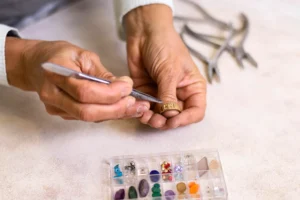
One of the most overlooked aspects of older jewellery is craftsmanship. In the past, artisans had the luxury of time and technique—intricate hand-carving, bezel settings, and cuts that maximised the gem’s natural character. These aren’t qualities you often find in today’s machine-made, high-volume jewellery.
Jeweller Peter Twiss, a London-based gem specialist, explains: “When I appraise Victorian or Art Deco jewellery, I’m always struck by the precision. Each stone was hand-cut to bring out its soul. That level of detail is nearly impossible in large-scale production.”
Wearing such a piece isn’t just about adornment—it’s about carrying a fragment of artistry that machines can’t replicate.
Emotional Weight: Stories Woven into Stones
Unlike factory-fresh pieces, old-school jewellery often comes with a story. Whether it’s an heirloom passed down through family or a vintage find from an antique market, these gems hold memories.
When I purchased a second-hand garnet brooch at a small antique shop in Vienna, the owner told me it once belonged to a pianist who wore it at performances in the 1940s. Suddenly, it wasn’t just an accessory—it became a conversation piece, a bridge to another time.
And here’s the truth: stories add a premium to jewellery. Just as provenance increases the value of art, the history behind old-school gems makes them infinitely more compelling than any brand-new counterpart.
Sustainability Before It Was Fashionable
Let’s face it: the jewellery industry isn’t always gentle on the planet. Mining precious stones often comes with environmental costs. By choosing old-school gem jewellery, you’re participating in a form of sustainable luxury. You’re recycling beauty, reducing demand for new mining, and preserving resources.
A 2019 study from the University of Cambridge highlighted that reusing gemstones and metals in vintage jewellery reduces carbon impact by up to 70% compared to newly mined equivalents. That means your antique ruby ring is not only exquisite—it’s eco-conscious.
Financial Wisdom: Beating Fast Fashion Jewellery
Think about the cycle of fast fashion jewellery: buy, wear a few times, discard. It’s cheap initially but costly in the long run. In contrast, vintage jewellery—though pricier upfront—retains or even appreciates in value. It’s a rare case where indulgence aligns perfectly with financial prudence.
If you’re building a collection, this is an unbeatable strategy. As a gem dealer once told me, “Modern designs come and go, but the stones don’t forget their worth.”
How to Start Building Your Old-School Gem Collection
You don’t need to be an aristocrat or an auction regular to start collecting. Here are a few actionable steps:
1. Start Small with Everyday Wear
Opt for pieces like vintage lockets, brooches, or gemstone rings. They’re often more affordable than headline-grabbing necklaces and are easier to weave into your daily wardrobe.
2. Verify Authenticity
Always buy from reputable jewellers or auction houses. Request certificates of authenticity, especially for high-value gems.
3. Learn About Eras
Art Deco, Victorian, and Edwardian styles each have distinct features. A little research helps you identify genuine period pieces and avoid overpriced replicas.
4. Focus on Timeless Gems
Emeralds, sapphires, rubies, and garnets tend to retain value better than more common stones. Diamonds hold well too, but coloured stones often tell richer stories.
5. Mix Investment with Sentiment
Don’t just buy with your head—buy with your heart. The best collections are built on emotional connections, not just price tags.
FAQs:
Q: Is vintage jewellery always more expensive than new?
Not necessarily. Smaller pieces, especially brooches and pendants, can be surprisingly affordable. Prices often depend on gemstone quality and provenance.
Q: How do I know if my old gem jewellery is valuable?
Have it appraised by a certified gemmologist. They’ll assess the gem’s authenticity, cut, and historical value.
Q: Is it risky to buy vintage jewellery online?
It can be, but if you use reputable auction sites (like Sotheby’s or Christie’s) or trusted dealers, you can minimise risks significantly.
Q: Can old-school jewellery be worn every day?
Yes, but with care. Older pieces may be more delicate, so avoid exposing them to harsh chemicals or rough activities.
Final Thoughts
Buying old-school gem jewellery isn’t just about owning something beautiful—it’s about making a decision that is culturally, financially, and environmentally sound. It’s about carrying artistry and history on your hands, neck, or ears. And let’s be honest: who wouldn’t want to wear a piece of history while also making a smart investment?
So, next time you’re tempted by fast-fashion sparkle, pause and consider: would you rather have a fleeting accessory, or a gem that will tell your story for generations?
Have you ever bought or inherited an old-school gem? Share your story in the comments—we’d love to hear the history you’re carrying with you.
You can also learn about gemstone role in medieval european societies on Sapphrion.