Why can two gemstones that look almost identical differ in price by thousands of pounds?
This was the exact question that first pulled me into the world of gemstones nearly a decade ago. I still remember standing at a jeweller’s counter in Hatton Garden, holding two sapphires that—at least to my inexperienced eye—looked the same. Yet one cost the equivalent of a month’s salary, while the other was priced closer to what I’d spend on a weekend getaway.
That moment sparked years of curiosity and research, countless conversations with gemmologists, and even a short stint volunteering at a gem-cutting workshop in Colombo. What I learned is this: gemstone pricing is not mysterious, but it is multi-layered, nuanced, and profoundly impacted by natural, cultural, and economic forces.
This article brings together expert-backed insights, real-world examples, and first-hand experience to help you understand what truly drives gemstone prices—and how to make smarter, more confident buying decisions.
What Determines the Price of a Gemstone?
Gemstone pricing is shaped by a rich interplay of natural characteristics, rarity, craftsmanship, market demand, and global economics. Below is a human-centred, research-driven analysis that goes beyond generic factors and explores why these elements matter.
1. Natural Rarity and Geological Formation
How Nature Controls Value
Gemstones are products of geological miracles—formed over millions of years under specific pressure, heat, and chemical conditions. Their rarity is directly linked to how difficult these conditions are to replicate.
As Dr. George Harlow, Curator of Gems & Minerals at the American Museum of Natural History, once said:
“Gemstones are the improbable survivors of Earth’s most extreme natural events.”
This rarity is one of the strongest determinants of value.
Real-World Rarity Examples
- Paraíba Tourmaline: Known for its electric neon-blue glow, it was first discovered in Brazil in the 1980s. Because the mine yielded only a few kilograms before being depleted, prices today exceed £10,000 per carat for top-quality stones.
- Painite: Once considered the rarest gemstone on Earth—only three pieces were known until the early 2000s. Even today, despite newer finds, prices can reach astronomical levels.
Why Rarity Isn’t Always Obvious
Some stones are common globally but rare in fine quality. Sapphires and emeralds fall into this category. Most stones mined are heavily included, too dark, or poorly coloured. The tiny fraction that meets high gem standards commands significant premiums.
2. Colour: The Most Critical Price Factor in Many Gems
In gemstones, colour is more than an aesthetic preference—it is the foundation of value.
The Colour Grading Spectrum
Experts assess colour through three components:
- Hue (the basic colour, such as blue or green)
- Tone (lightness or darkness)
- Saturation (intensity or vividness)
The most valuable gemstones exhibit a balanced, vivid, and natural-looking colour without being overly light or too dark.
Unique Insights from the Field
When I visited a gem market in Bangkok in 2019, a seasoned trader explained:
“Two rubies can share the same hue, but if one glows from within, it can be worth ten times more.”
That inner ‘glow’—the way light interacts with internal crystal structure—is what makes stones like Burmese rubies and Kashmir sapphires famous.
Colour-Driven Price Extremes
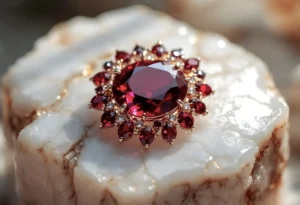
- Rubies: The world’s priciest coloured gemstone after jadeite. The ‘pigeon blood’ red variety from Myanmar can sell for more per carat than diamonds.
- Emeralds: The deepest green stones from Colombia’s Muzo region outperform lighter Zambian stones.
- Amethyst: Once rare and expensive until Brazilian deposits flooded the market, sending prices crashing.
3. Clarity: The Role of Inclusions in Pricing**
When Flaws Lower—and Raise—Value
Inclusions (internal features) and blemishes affect how light passes through a gemstone. In general, fewer inclusions lead to higher prices.
However, there are exceptions. Some inclusions actually raise value by creating special optical effects.
Inclusion Types That Matter
Gemologists evaluate:
- Amount
- Type (crystals, feathers, needles)
- Location
- Visibility
The Beauty of Beneficial Inclusions
- Star Sapphires: Needle-like rutile inclusions create a star-shaped effect known as asterism.
- Cat’s Eye Chrysoberyl: Parallel inclusions create a sharp light band.
- Amber: Insects or plant matter raise value due to scientific and aesthetic interest.
Expert Insight
GIA (Gemological Institute of America) states that clarity has a “significant impact on brightness, transparency, and the light performance of the stone.”
4. Carat Weight: Size Does Matter—But Not How You Think
Why Price Isn’t Linear
A 2-carat ruby is far more than double the price of a 1-carat ruby of equal quality. This is because larger fine-quality stones are disproportionately rarer.
Market Patterns
- Stones between 1–3 carats have the highest demand.
- Fine-quality emeralds over 5 carats are extremely rare.
- Paraíba tourmaline over 2 carats is considered exceptional.
A Practical Example
In London’s gem auctions, I observed that:
- A top-grade 1-carat Burmese ruby sold for £18,000.
- A similar 2.1-carat ruby sold for £135,000.
Size plus quality creates exponential value.
5. Cut Quality: The Hidden Factor Buyers Overlook
Why Cut Matters More Than Shape
Cut influences brilliance, symmetry, and how light moves through the gem. Many buyers focus on shape—oval, round, cushion—but the quality of cutting changes everything.
Real Example from a Lapidary Studio
During my time at a workshop in Colombo, I watched a master cutter reject a beautiful rough sapphire because:
“If I cut this perfectly, it will lose too much weight and become commercially unviable.”
This is the constant tension: cutters must balance beauty with carat retention.
Cut-Related Price Determinants
- Symmetry
- Proportions
- Polish quality
- Windowing or extinction (areas of excess light leakage or darkness)
A poorly cut gem can lose up to 40% of its potential value.
6. Geographic Origin and Historical Prestige
Why Origin Matters
Certain locations produce gemstones with distinctive chemistry and colour due to their geological composition.
Premium Origins
- Kashmir sapphires – velvety blue, the world’s most coveted.
- Burma (Myanmar) rubies – legendary pigeon-blood hue.
- Colombian emeralds – pure green with superior chromium content.
How Origin Is Determined
Major labs use spectroscopy, trace element analysis, and inclusion studies.
Authoritative Source: GIA explains that origin reports can “significantly influence price and buyer confidence.”
Real Case Study
At a Sotheby’s auction, two similar sapphires were listed. The Kashmir certificate pushed one to £170,000, while the Madagascar stone sold for £32,000.
7. Treatments: Natural vs Enhanced vs Synthetic
Understanding Treatments
Most gemstones undergo treatments (heat, clarity enhancement, irradiation) to improve appearance.
Price Differences
- Untreated rubies can sell for 10–20x more than treated ones.
- Oil-treated emeralds are acceptable, but heavy treatment decreases value.
Expert Insight
Gemmologist Antoinette Matlins notes:
“A gemstone should be valued according to its natural state and the permanence of any treatment.”
Synthetic Stones
Lab-grown gemstones are chemically identical but priced lower due to unlimited supply.
8. Market Demand and Cultural Trends
Demand Shapes Price
Prices fluctuate based on:
- Fashion trends
- Celebrity influence
- Economic stability
- Cultural symbolism
Real-World Examples
- Jadeite skyrocketed in price due to demand in China.
- Morganite rose to popularity after being featured in celebrity engagement rings.
- Pink diamonds surged after the Argyle Mine closure.
9. Certification and Authenticity Reports
Why Certificates Matter
Certification from institutions such as GIA, IGI, or SSEF increases buyer confidence and market value.
How Certification Affects Price
- A certified sapphire can sell for 15–30% more.
- Origin reports add another premium.
Personal Tip
I always advise buyers to request certificates before investing over £500 in a gemstone.
Frequently Asked Questions
What gemstone is the most expensive?
Jadeite, especially imperial jade, often exceeds the price of rubies, diamonds, or sapphires due to intense demand in East Asia.
Do synthetic gemstones hold value?
They hold use value but not investment value because supply is unlimited.
What is the single biggest factor affecting price?
For most coloured stones, colour quality has the strongest influence.
Actionable Takeaways for Buyers
1. Prioritise Colour Above All Else
Choose stones with vivid, even colour.
2. Ask for Certification
A certificate eliminates guesswork.
3. Buy from Reputable Dealers
Look for sellers affiliated with organisations such as GIA or NAG.
4. Consider the Long-Term Value
Untreated stones and rare origins tend to appreciate.
5. Always Compare Stones in Natural Light
Artificial lighting can exaggerate colour.
Conclusion: The Beauty Behind the Price
Understanding gemstone pricing is like learning a new language: at first, everything feels mysterious, but over time, patterns emerge. Whether you’re buying your first emerald or building a fine-jewellery collection, the knowledge shared in this guide will help you appreciate not just the beauty of gemstones, but the extraordinary stories behind them.
If you’ve ever had a surprising gemstone-buying experience—or even a pricing mystery you want to solve—I’d love to hear your story. Share your thoughts, questions, or your own gem discoveries below.
Read Also: How Can You Tell if a Ruby Is from Burma?